New Mini Ultrasound Device Could Enable Earlier Breast Cancer Diagnoses
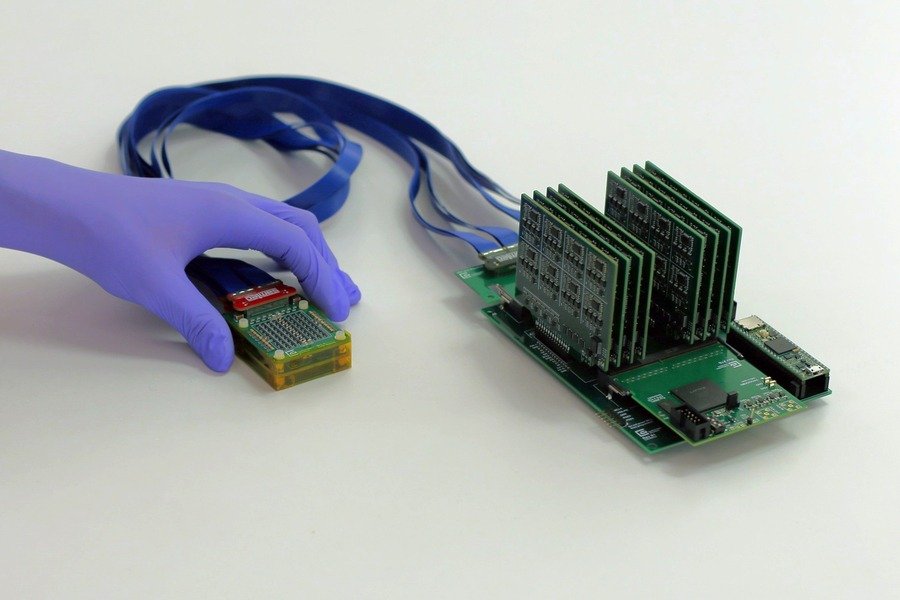
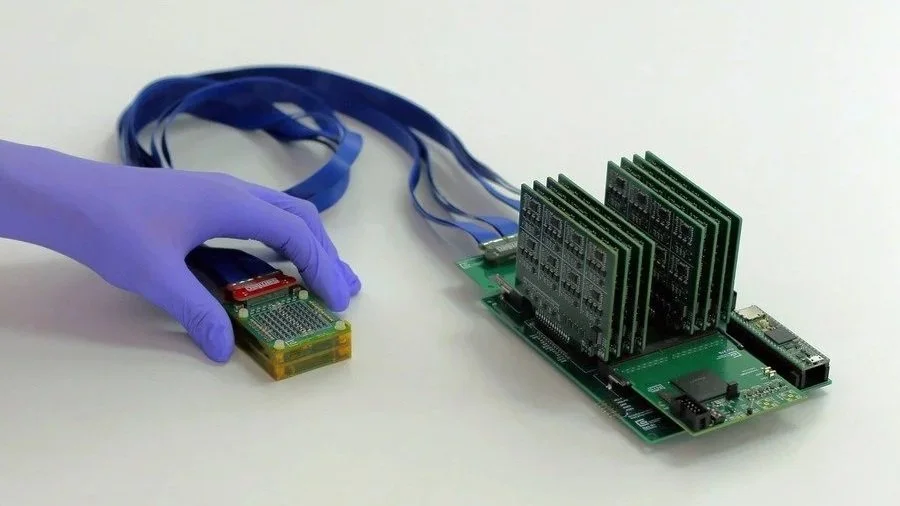
The device is still in development and consists of an ultrasound probe and a processor module that is slightly larger than a smartphone. Photo: Conformable Decoders Lab at the MIT Media Lab
A small device is raising big hopes for millions of women. The mini ultrasound system developed at the Massachusetts Institute of Technology aims to make breast cancer screening simpler and more accessible. That could improve survival rates for many women affected by the disease.
Breast cancer is the most common cancer among women worldwide. According to the WHO, about 2.3 million women are diagnosed each year. When breast cancer is detected early, survival rates are very high. In later stages, however, they drop significantly.
Aggressive tumors can develop between screenings
The MIT device is designed to detect tumors earlier in women at higher risk. Earlier detection could improve survival. The portable ultrasound system is intended to allow more frequent checkups directly in primary care. It was presented in a study published in the journal Advanced Healthcare Materials.
Too much time often passes between routine screening appointments, explains study lead Canan Dagdeviren. During that time, tumors can develop unnoticed. These so‑called interval cancers account for 20 to 30 percent of all breast cancer cases, according to Dagdeviren. They also tend to be more aggressive than tumors found during routine screenings.
New scanners can be used in primary care
Women with dense breast tissue or a higher genetic risk need more frequent ultrasound exams, Dagdeviren says. But the necessary equipment is expensive and usually only available in large hospitals with specialized staff. Close monitoring is often not possible.
The portable mini ultrasound device developed at MIT is meant to fill this gap. It can be operated by primary care physicians and does not require radiology specialists. This makes regular checkups possible even for women who live far from large medical centers.
Portable mini ultrasound connects to a laptop
“Ultrasound imaging has long been limited to hospitals,” says Osman Goni Nayeem, one of the study’s lead authors. “To use ultrasound outside the hospital setting, we redesigned the entire architecture and introduced a new manufacturing process to make the technology scalable and practical.”
The new mini device can generate a 3D image of the entire breast. It only requires scans at two or three positions. The data is processed by a motherboard that MIT estimates will cost around 300 dollars. The smartphone‑sized board can be connected to a computer or laptop to display the images.
MIT device requires less pressure and may be more precise
The portable ultrasound can even run on a battery. And the scanner does not need to be pressed into the tissue, the research team notes. “With our technology, you only need to place it gently on the tissue, and it can visualize cysts in their original location and size,” says Dagdeviren.
The scanner can image tissue up to six inches deep and detect tumors that mammograms often miss, especially in dense breast tissue. In a test with a 71‑year‑old woman, the mini ultrasound detected the same cysts previously identified in the hospital. Because the MIT scanner does not require pressure on the tissue, it even showed the cysts more precisely than the clinical device.
A first clinical study is currently underway at MIT to test the device. Larger trials will be needed to determine how reliably it detects tumors and whether it produces false results. Approval is likely still several years away.
MIT aims to optimize the device for home use
At the same time, the team is already working on improvements. They want to make the mini device even smaller and easier to handle. While the current version is designed for medical practices, they are already considering a home‑use model for high‑risk patients.
The smaller motherboard is expected to connect directly to a smartphone. An app is also in development to help patients position the ultrasound probe correctly. The app could analyze the data or send it to medical professionals.
This could create a simple, affordable and accessible monitoring system for people at higher risk. It would be ideal for early detection between routine screenings. Interval cancers could be caught earlier, improving survival chances.
What women can do today
Even without high‑tech devices, there are ways to detect breast cancer or warning signs at home. The following recommendations come from cancer organizations and the WHO.
Regular medical exams
Women 40 and older: annual clinical breast exam Women 50 and older: mammography screening every two years Women at higher risk: personalized intervals, often annual mammography plus ultrasound or MRI
Self‑exams
Experts emphasize that self‑exams do not replace screening, but they can help detect changes early. Self‑exams should be done once a month, ideally a few days after the menstrual period. Look for changes such as lumps, dimpling, skin changes, redness, peau d’orange texture, nipple discharge or nipple changes. Persistent pain in one area should also be checked.
Who is considered high risk?
More frequent monitoring is recommended for:
BRCA1 or BRCA2 gene mutations
strong family history (mother, sister, daughter)
very dense breast tissue
previous breast cancer
chest radiation at a young age
And men?
Men can also develop breast cancer. Older men with a family history are at higher risk, although the number of cases is very small compared to women.
Sources
Advanced Healthcare Materials: Real-Time 3D Ultrasound Imaging with an Ultra-Sparse, Low Power Architecture
MIT: A portable ultrasound sensor may enable earlier detection of breast cancer
WHO: Breast Cancer
American Cancer Society: Breast Cancer Early Detection and Diagnosis
Krebsliga: Früherkennung von Brustkrebs
Krebsforschungszentrum: Brustkrebs (Mammakarzinom)
Get your weekly dose of good news every Wednesday morning. We'll send you all the new Happy Spot articles with quick summaries, along with the week's top headlines featuring good news worth reading.