A New Life‑Saving Powder Stops Severe Bleeding in One Second
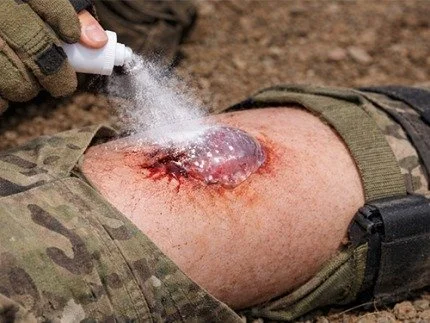
A powder developed in South Korea can stop bleeding in a single second, offering a potential breakthrough for emergency medicine. Photo: Conformable Decoders Lab at the MIT Media Lab
It sounds like science fiction, but it is already real. A research team at KAIST University in South Korea has developed a powder that can stop bleeding in just one second. Once sprayed onto a wound, it reacts immediately and forms a fast‑setting hydrogel that seals the injury.
For first responders and medical teams, the news is promising. In accidents, disasters or war zones, every minute can determine whether a patient survives. Severe bleeding must be controlled with pressure bandages or tourniquets, but these methods reach their limits with deep or complex wounds.
Uncontrolled bleeding remains one of the leading causes of death in accidents, disasters and armed conflicts. In adults, rapidly losing about one liter of blood can already be life‑threatening. For children, the danger arises much earlier because of their lower blood volume.
Powder reacts with blood and forms a protective cap
The innovation from South Korea could change wound care. The “AGCL Powder” consists of three natural substances: alginate (derived from brown algae), gellan gum (a thickening agent produced through bacterial fermentation) and chitosan (a powder made from the exoskeletons of crustaceans and insects).
None of these ingredients are new, but together they become a powerful tool. When the powder touches the wound, it reacts instantly with the calcium in the blood. It forms a firm hydrogel that acts like a protective cap over the injury. At the same time, the powder can absorb seven times its own weight in blood, the study reports.
Even heavy bleeding stops immediately. The study suggests, that no medical training is required, no pressure, no bandage, no preparation. According to the researchers, the powder works on deep or irregular wounds, withstands heat, cold and high humidity, and is unaffected by movement or vibration. It also appears to have antibacterial properties and may even support tissue regeneration.
“Impressive results”, but no approval yet
Researchers designed the flexible spray to be used by both professionals and laypeople. Early tests in mice showed impressive results even in complex wounds, the study reports. It worked not only on external injuries but also in surgical settings on internal bleeding.
The powder is said to remain stable for two years, even at room temperature or in humid environments. That greatly expands its potential use. However, the spray has not yet been approved. Clinical trials in humans still need to be conducted.
If the powder performs as well as the study suggests, it could soon become standard equipment in ambulances, emergency kits and even hospitals. The ability to stop bleeding instantly would save countless lives. One day, a lighter version might even find its way into home medicine cabinets to seal minor cuts and injuries reliably.
How to treat small wounds at home
It may take some time before the experimental powder appears in households. Until then, these tips can help with first aid for small wounds, scrapes or minor cuts at home:
Stay calm: Stress raises blood pressure and increases bleeding. The injured person should sit or lie down.
Gentle pressure: For small, superficial bleeding, light pressure with a clean cloth can help until the bleeding slows. What not to do for minor wounds: tying off limbs or pressing in the groin or armpit should be avoided, experts say.
Cleanliness: Dirt, soil or dust can hinder healing. Rinse the wound, disinfect the area around it and dry it. Make sure hands are clean or wear disposable gloves. Important: foreign objects in the wound should only be removed by a doctor.
Protect the wound: A clean, dry bandage or adhesive dressing keeps friction, dirt and bacteria away. Change the dressing after one or two days. If signs of infection appear (such as fever) or if tetanus vaccination is missing, seek medical care immediately.
Do not scratch: Scabs are natural protective layers. Leaving them alone helps the skin heal underneath.
Nosebleeds: Lean the head slightly forward. Support the forehead with the hands. Place a cold compress on the nose. For heavy or persistent bleeding, call emergency services.
Stay hydrated: The body heals better when well hydrated.
Seek medical care: Anything more than a minor cut should be evaluated by a medical professional. Also seek help if the wound cannot be cleaned properly, swells or becomes more painful.
Sources
Advanced Functional Materials: An Ionic Gelation Powder for Ultrafast Hemostasis and Accelerated Wound Healing
KAIST News: Hemostasis in 1 Second... Boosting Survival Rates for Soldiers
NHS: Cuts and grazes
Deutsches Rotes Kreuz: Blutungen stillen
Get your weekly dose of good news every Wednesday morning. We'll send you all the new Happy Spot articles with quick summaries, along with the week's top headlines featuring good news worth reading.